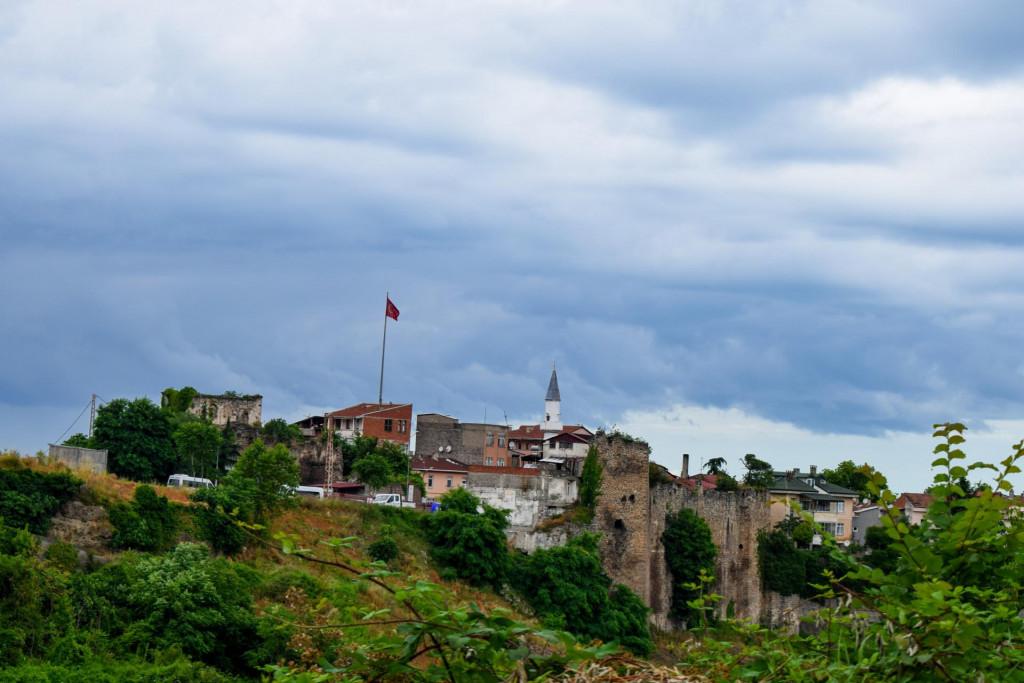
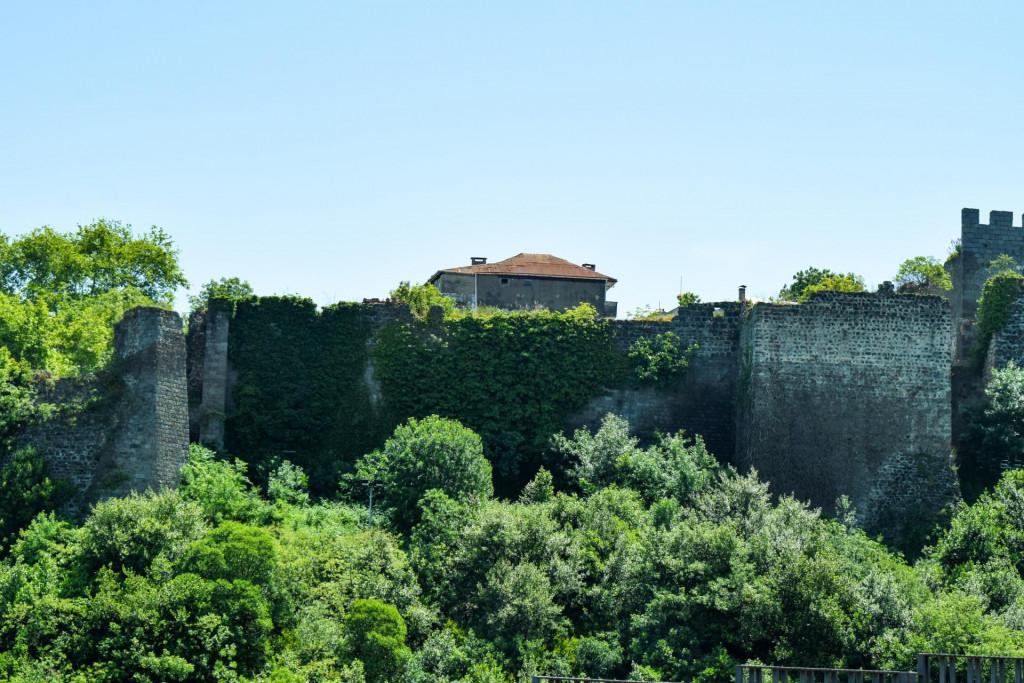
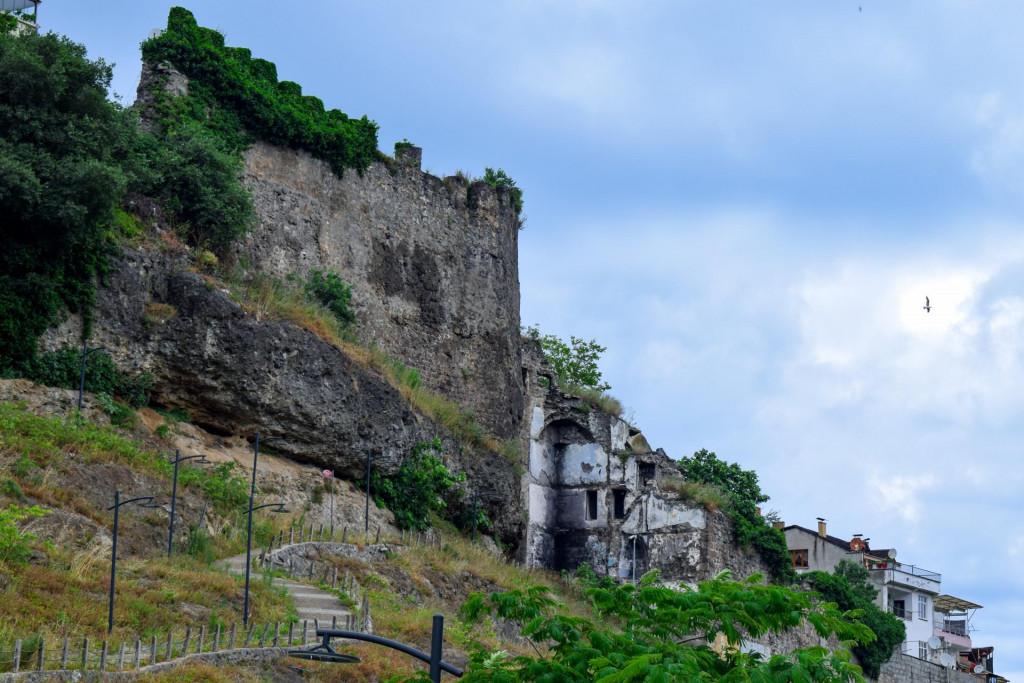
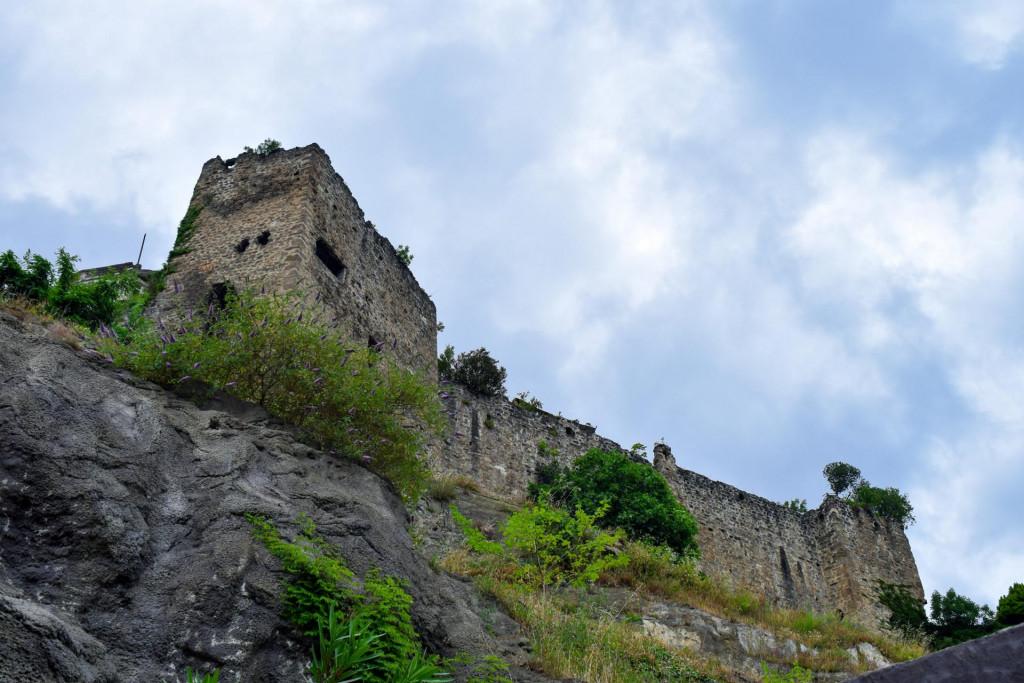
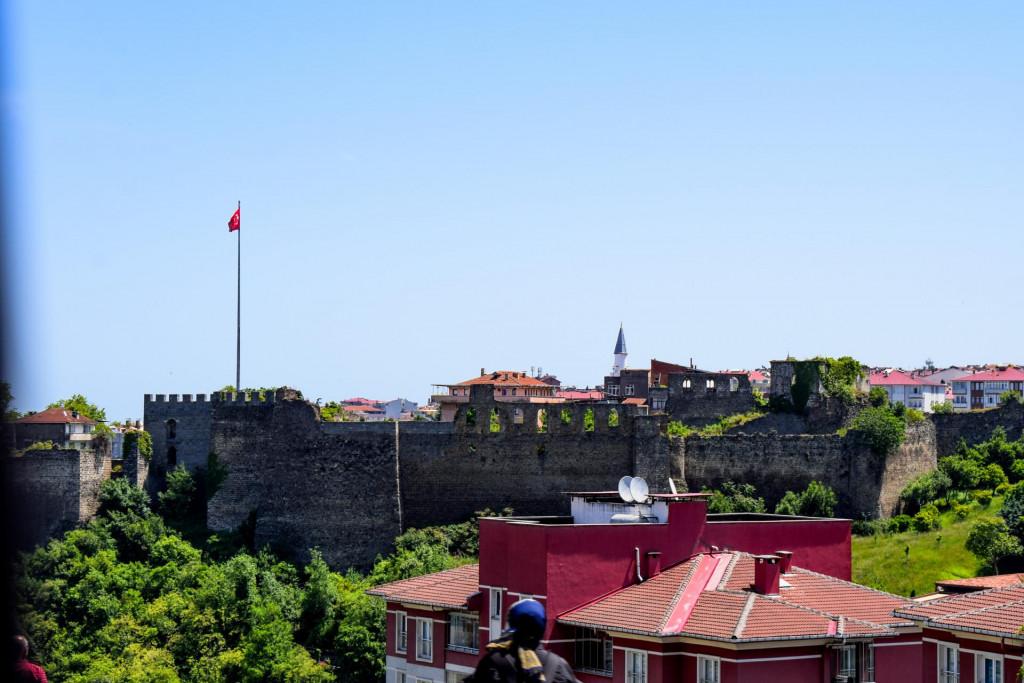
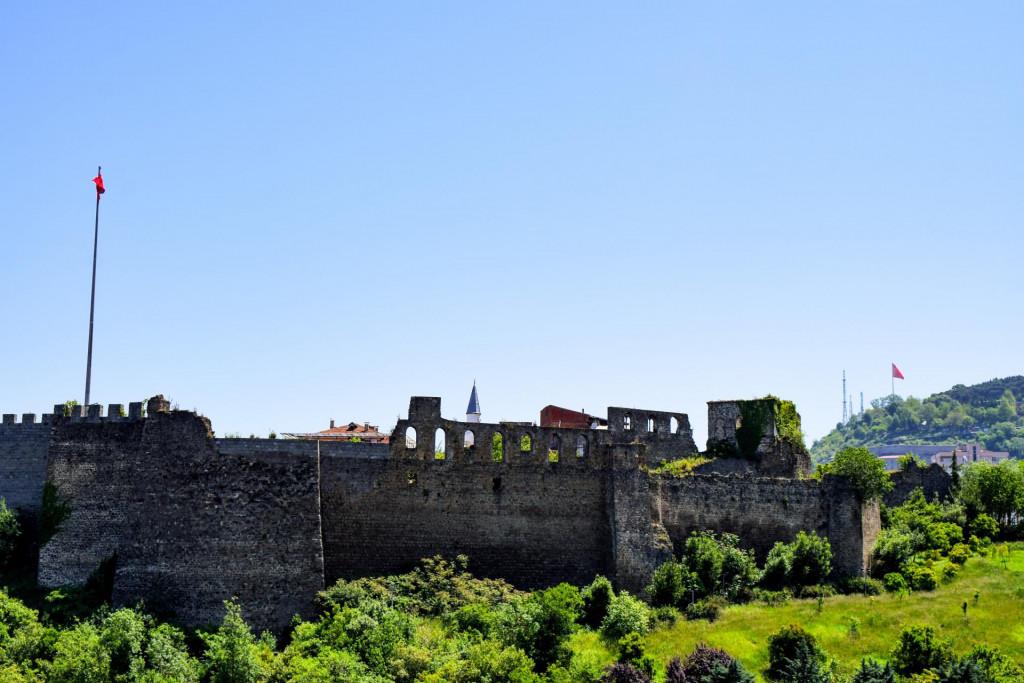
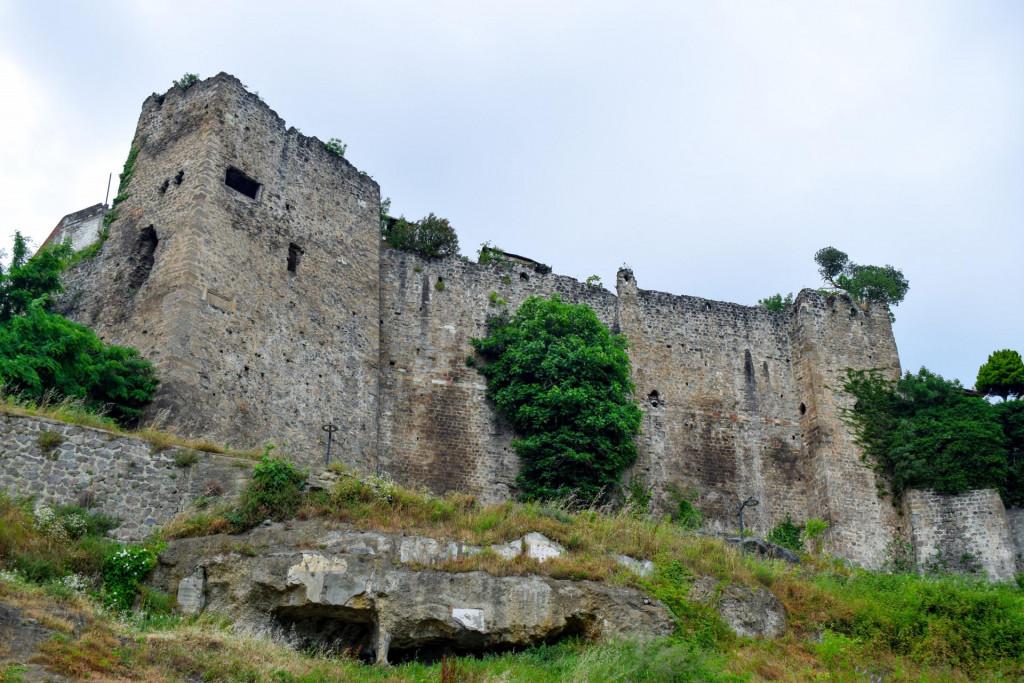
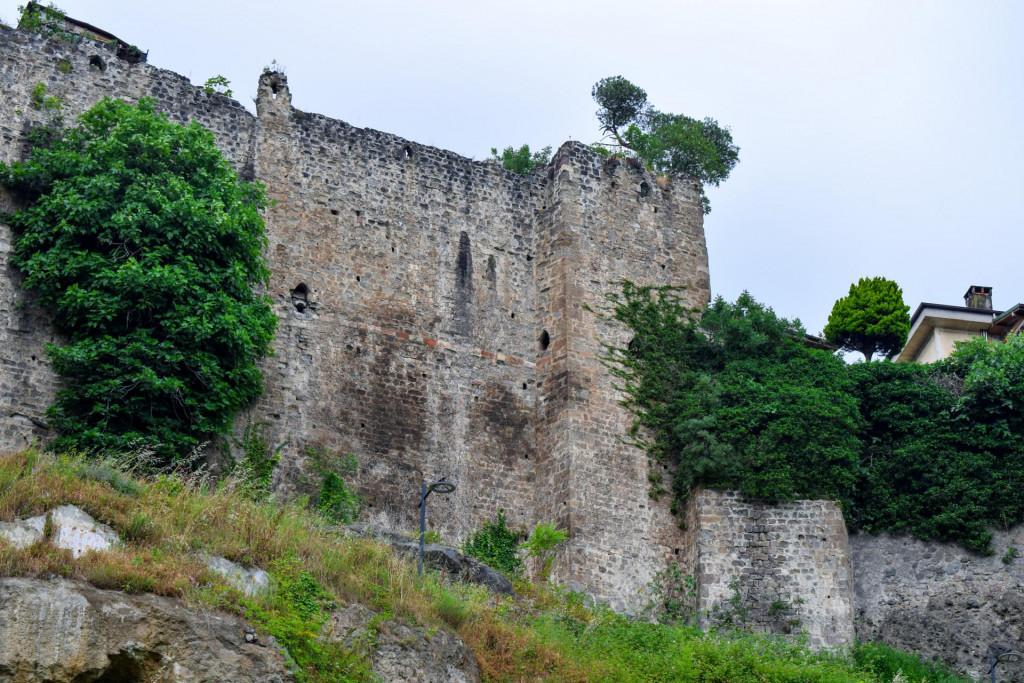
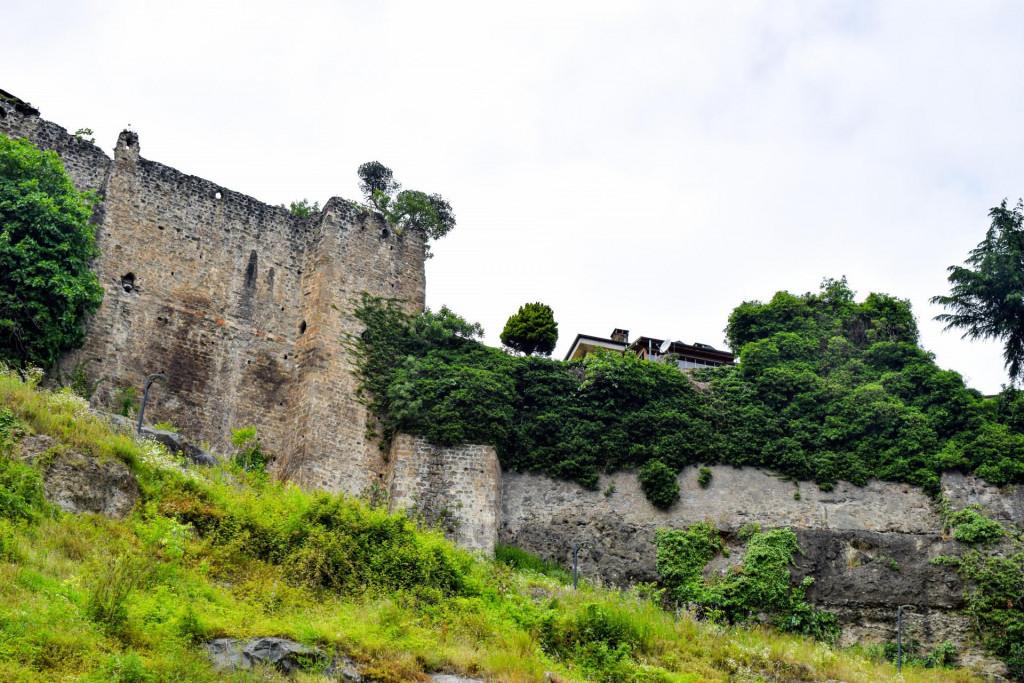
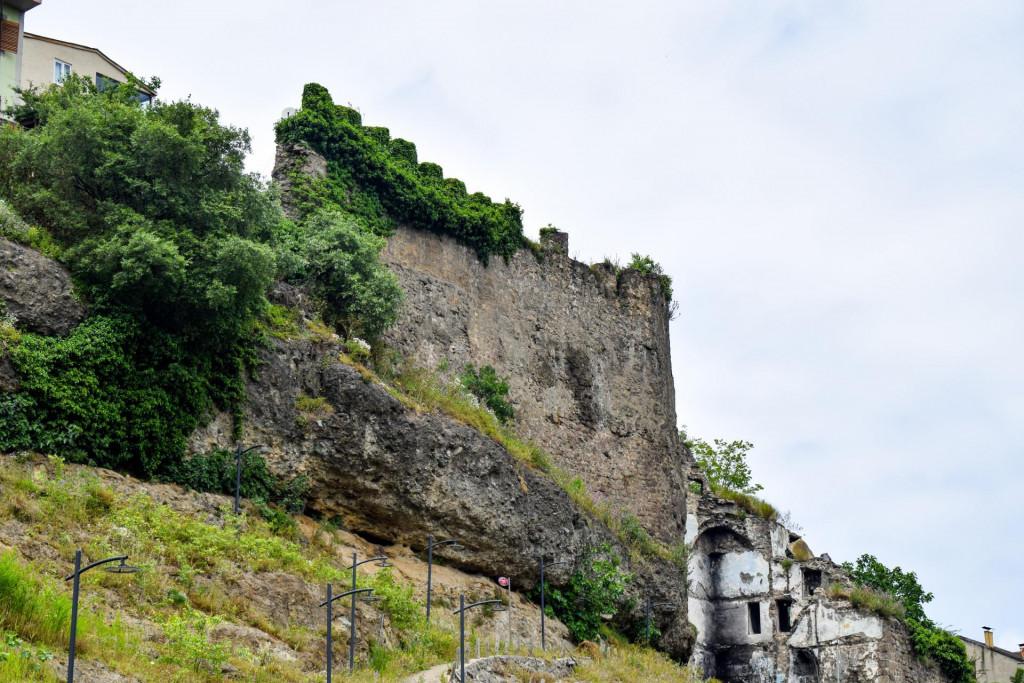
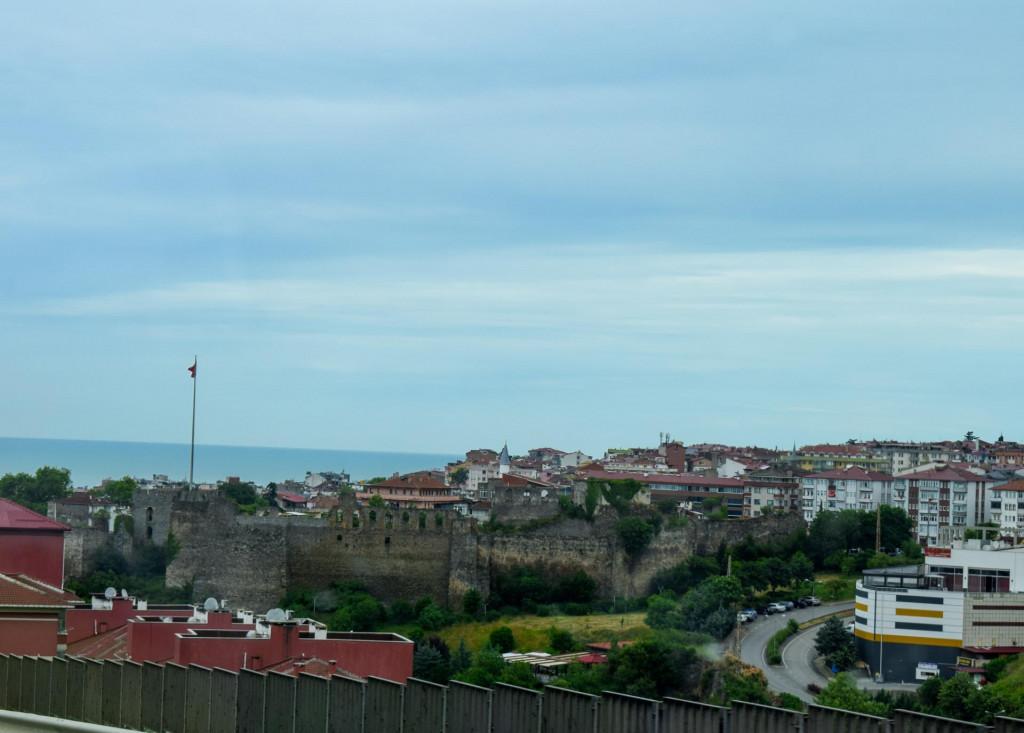
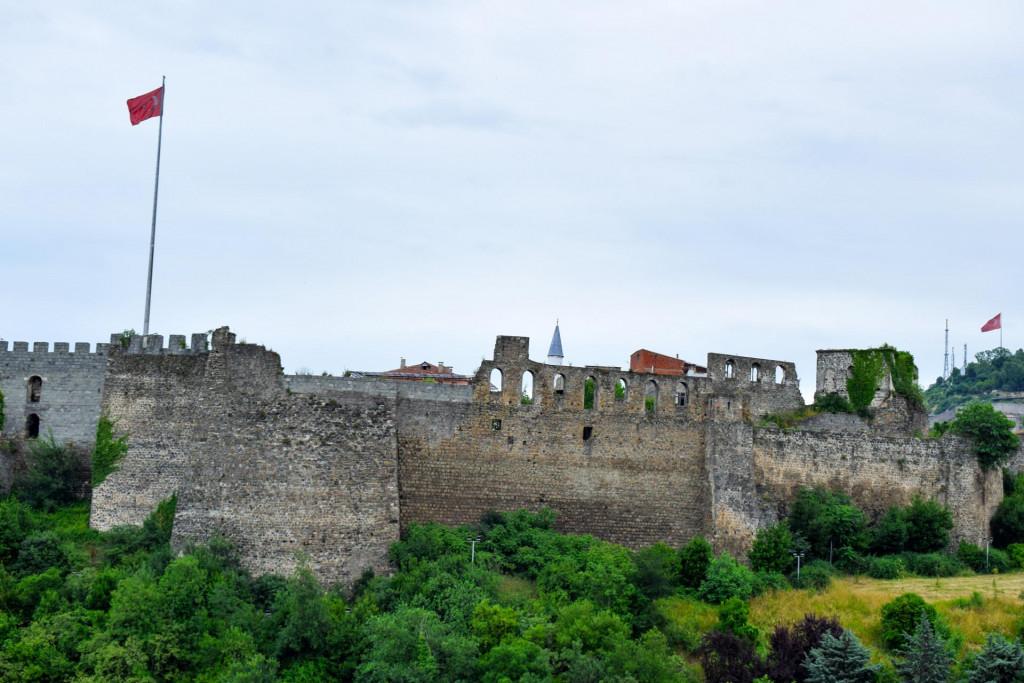
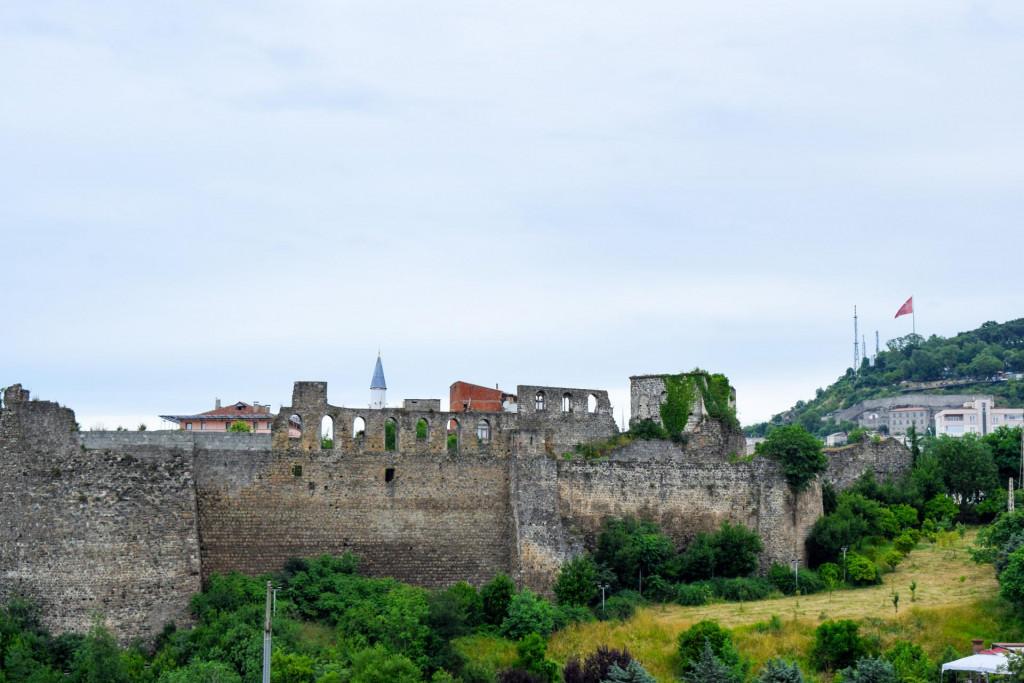
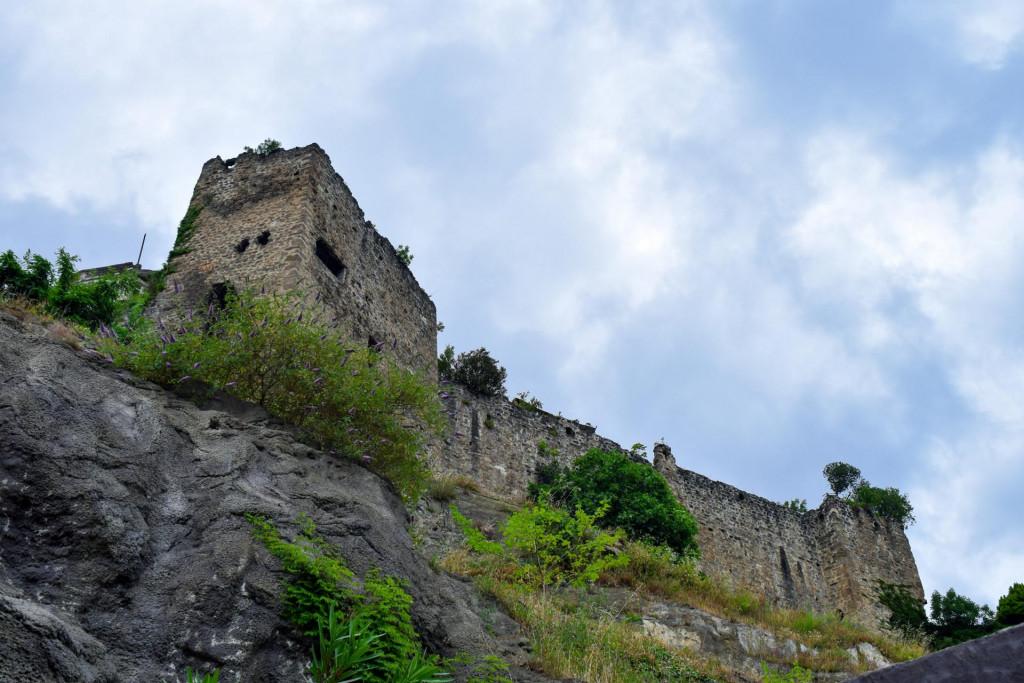
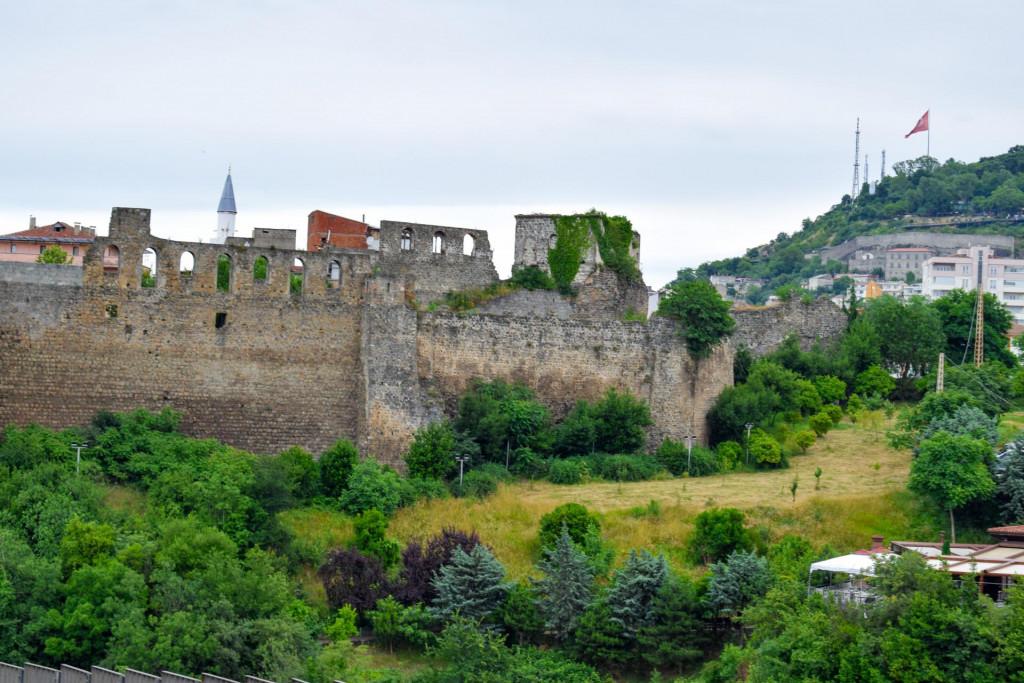
The Castle of Trabzon (Greek: Κάστρο της Τραπεζούντας; Turkish: Trabzon Kalesi) is a historical fortress-city and a complex of fortifications. It is located in the northeastern part of Turkey, in the city of Trabzon. According to the most common opinions, it was built during the rule of the Roman Empire. The fortress-city wall is built of massive stone and it extended from the hill to the Black Sea coast. The wall divided the city into three parts: the "Upper Fortress" (Turkish: Yukari Hisar), the "Middle Fortress" (Turkish: Orta Hisar) and the "Lower Fortress" (Turkish: Aşağı Hisar). The Upper and Middle Fortresses are surrounded by a valley on both sides, and the Zaganos and Tabakhanea rivers flow to the east and west. The Lower Fortress also covers the western bank of the Zaganos. Most of the city walls have been preserved to this day and are considered the oldest buildings in the city of Trabzon. Currently, part of the fortress wall is in a military zone, so it is impossible to visit it.
The highest and most fortified part of the city, the so-called "Upper Citadel", functioned as a citadel and the city's acropolis. It is assumed that the citadel was built as early as 2000 BC. The ancient Greek historian Xenophon, who visited the city in the 5th century BC, provides information about the existence of ancient walls here. Other early sources provide information about the ancient buildings located here: a hippodrome, a tower, a bathhouse and a palace. Over the centuries, the citadel has been rebuilt many times. The walls of the upper citadel are higher and wider than the rest of the city. The construction of an aqueduct near the city, which supplied the upper city with fresh water, is associated with the rule of the Roman Empire. Entry to the upper city was possible through a double gate, which was accessible from the middle citadel. The imperial palace was also located here, and later, after the Ottoman conquest of the Empire of Trebizond in 1461, a small mosque was built near the palace. In the 17th century, this part of the fortress was destroyed during a civil war, before the upper fortress became the residence of the local ruler. The western part of the wall built by Alexius II (1297–1330) during the Empire of Trebizond has survived. According to an inscription, its construction was completed in 1324. In some places, the remains of a Roman acropolis from the 1st-2nd centuries, built of massive stone, are visible.
The construction of the Middle Citadel dates back to the reign of Emperor Alexius II of Trebizond (r. 1297–1330). It does not have a standard form. The Middle City has two gates: the Imaret Gate (Turkish: Imaret Kapı) to the east, and the Zaganos Gate (Turkish: Zağanos Kapı) to the west. Among the buildings here, the following are worth mentioning: the Orta Hisar Mosque (formerly the Church of Chrysocefalos), the Amasya Mosque, the Shirin Khatun Mosque, the Musa Pasha Mosque, the Governor's Palace, the Zaganos Bridge, the Kule and Çifte Baths, the latter of which was originally a domed and three-nave basilica.
There are two road bridges on the former territory of the Middle Fortress: the Tabakhane and Zagano bridges, built in the 19th century. This bridge is a single, massive arch. The Lower Fortress was built in the 14th century. The Lower Fortress extends from the Zagano Gate to the west, to the Black Sea coast, to the harbor founded by Hadrian. This part of the fortress-city was also built by Emperor Alexius II. It has two gates to the east: Pazarkapi and Muhmanekapi. This was not a very reliable fence, as it did not have towers. Of the historical buildings, the following are worth noting: Mola Sihi Mosque (former St. Andrew's Church), Khoja Halil Mosque, Pazarkapi Mosque, Kundupoglu and Yarimbiokoglu Palace, Sekiz Duzenli Bath, Topane Bath, Haji Arif Hamam Bath and Iskender Pasha Fountain.

 GEO
GEO  ENG
ENG  RUS
RUS 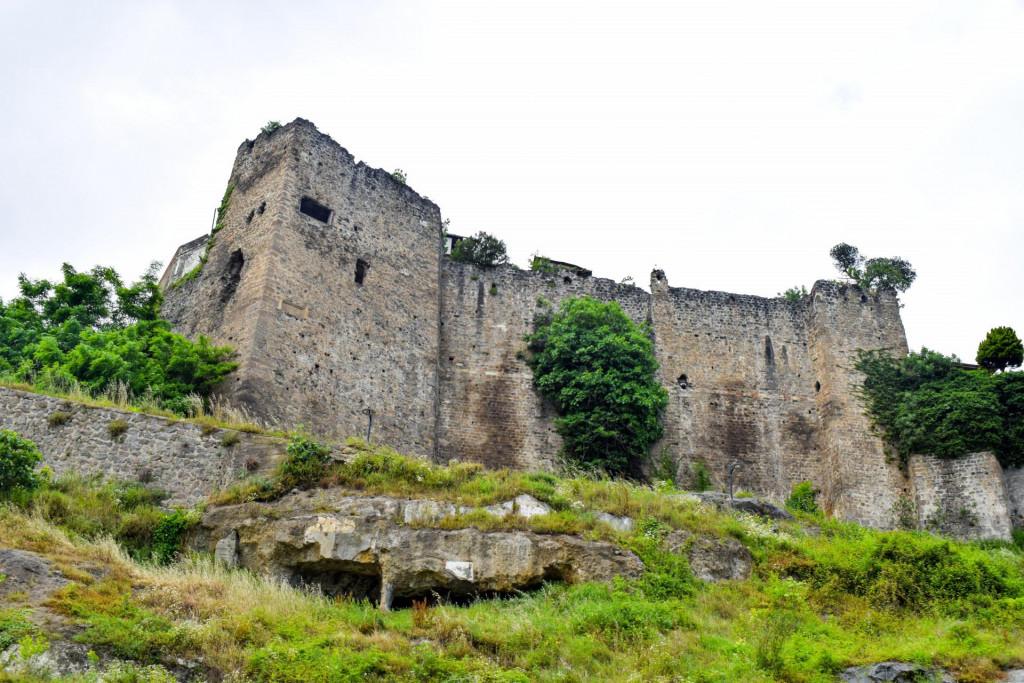







 LOGIN WITH GOOGLE
Please login to ask a question
Ask a Question