Today I want to tell you about Gori . If you have the willpower and read the article to the end, I think you will know a little more about Gori than you did before reading the article, and when they tell you, "Let's go to Gori!" or "We're going to the Stalin Museum," you won't answer.
The urban architecture of Gori may not surprise you at first glance. Not because the rich did not live in Gori, or they did not have taste. Quite the opposite. But the earthquake that occurred on February 20, 1920, almost leveled the entire city to the ground. The tremors continued for a long time, and stones and bricks fell from the buildings. Therefore, the terrified population walked in the middle of the street for a long time. So long that even today we have this living expression: “How like a Gori, you walk in the middle of the road.”
The following villages were almost completely destroyed: Ateni, Gorijvari, Skra, Khovle, Sasireti, Doesi and other villages. 75 villages in the district suffered varying degrees of damage. According to the Statistical Commission, the earthquake claimed the lives of 129 people in the district (according to other sources, up to 200 died), 661 were injured. The disaster affected 7,118 families.
The Democratic Republic of Georgia, by this time already had domestic and foreign problems to deal with, had one more stone to throw up its sleeve. Akaki Chkhenkeli, who had seen the destroyed Shida Kartli with his own eyes, returned to Tbilisi and stated directly at the session of the Constituent Assembly: - This is what we lacked!
However, the young republic showed an unprecedented example of solidarity and began to work with united forces. The newspaper “Republic of Georgia” published a rather original appeal to “the rich”: “Rich, the earthquake will equalize everyone. Spend your wealth to help the victims.”
In exactly one year, Georgia lost its hard-won independence again, and Gori continued to exist in Soviet monumentalism, or rather brutalism. However, to its credit, in Gori, unlike Tbilisi, you can still see the color of the sky, and on the horizon, the snow-capped peaks of the Caucasus.
Unbelievable? Come and see for yourself, come to Gori!
1. Gori Fortress is , of course, the #1 historical and must-see site. Not least because it catches the eye from afar and is one of the best-preserved and largest citadels near Tbilisi.
It was first mentioned in sources as the “Gori Fortress” in the 13th century. The strategic fortress has been rebuilt and renovated many times over the centuries. Interesting data has been preserved from the 17th century in the notes and sketches of the Catholic missionary Christopher de Castel. The drawing shows that most of the fortress that has survived today was built during the reign of Rostom Khan and by his own order. He appreciated the strategic importance of the fortress and took care of the fortification of this place. In the first years after the annexation of Georgia by Russia (1801), the fortress still performed its function - a grenadier battalion of the Russian army was stationed here. In the 19th century, it lost its strategic importance.
The most beautiful and impressive views of the city and the entire Shida Kartli region open from the fortress. To the north, the eye can also see the temporarily occupied territories.
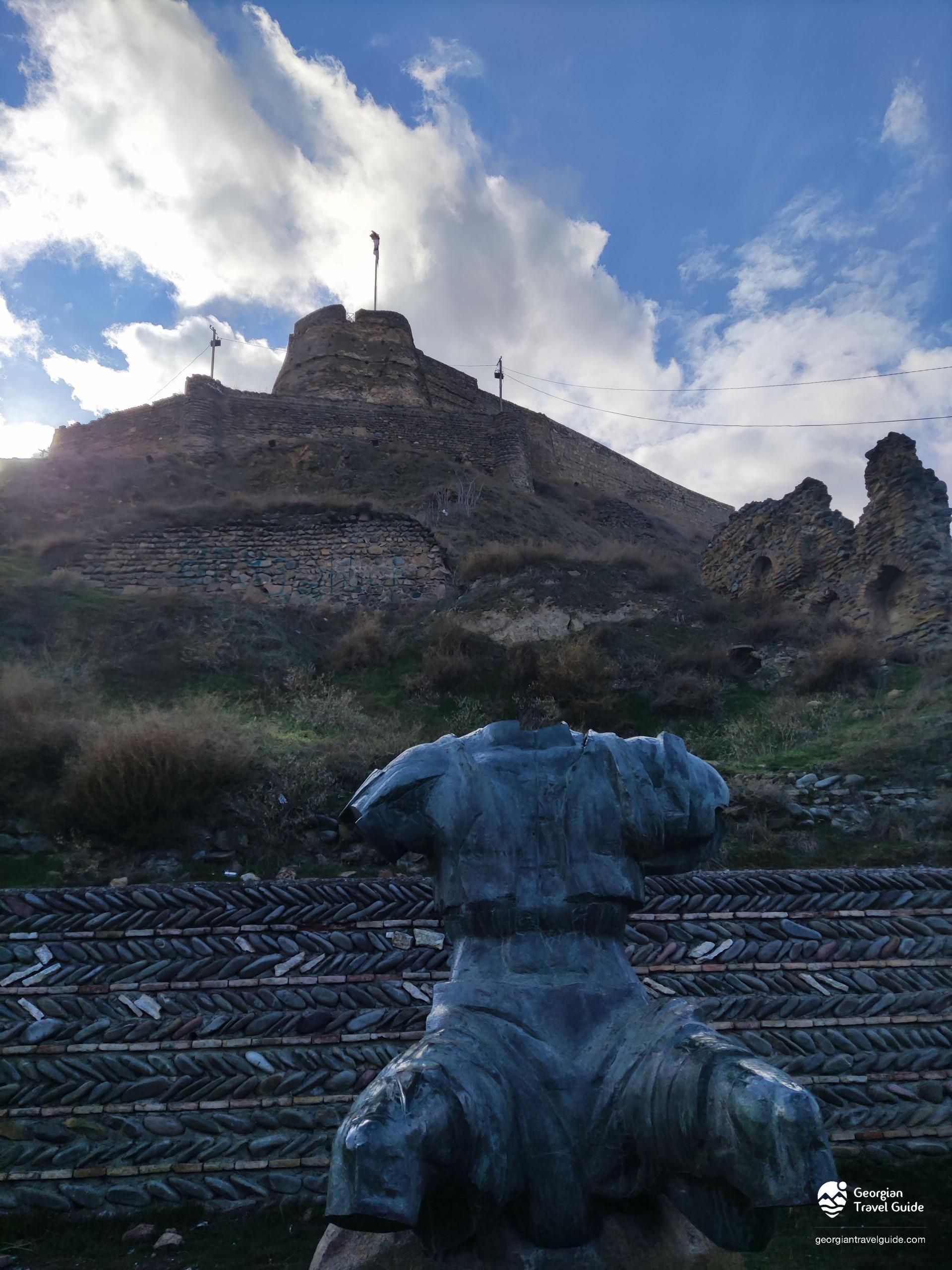
2. The "Memorial to the Georgian Fighting Heroes" is located at the entrance to the fortress, and it is simply impossible to miss or pass by this seemingly strange place.
The complex consists of 8 statues of fighters and its author is Gogi Ochiauria. They call the monument "Memorial of the Dismembered Fighters" and it really is. The horrifying statues will make your blood run cold, and if someone has not heard anything about the 2008 Russian-Georgian war, there is no need to say more - the dismembered heroes themselves will tell about the Battle of Shindisi and the cadets defending Tbilisi.
3. Gori Cathedral, the beauty and pearl of the city, stands opposite the Warriors' Complex, on the other side of the road.
The first Catholic church in this place was built in the 17th century by Catholic missionaries and functioned almost uninterruptedly until the establishment of the Soviet system.
In 1923, the government closed the Catholic Church in Gori. The head of the church, Patriarch Konstantine Saparashvili, was considered an opponent of the Soviet system.
At that time, the Pope himself became interested in the fate of the Gori Cathedral. This is confirmed by a letter from the Vatican delegate dated September 16, 1923, addressed to the People's Commissar of Internal Affairs Alexander (Sasha) Gegechkori. On September 22, 1923, the Bolshevik government of Georgia made certain concessions, as requests from believers to open the closed chapels were being sent from almost all corners. However, on October 22, 1924, the Presidium of the Gori Regional Executive Committee petitioned the People's Commissariat of Internal Affairs to expel the Catholic Patriarch from Georgia.
At the end of the 1970s, the church building was transferred to the Gori Komsomol, where the youth center set up a concert hall, and the Gori Music School was housed in the church. After the start of “perestroika,” at the insistent request of believers, the disco was canceled, but the authorities did not return the church to the believers; a Catholic priest who periodically came to Gori from Tbilisi performed services in the apartments of believers. In 1989, the city executive committee transferred the canceled Catholic church of Gori to the Orthodox. In the 2000s, repair and restoration work was carried out in the church, Catholic frescoes were taken down, and old traces were supposedly erased. However, many in Gori still call it the “French Church” or the “former Catholic Church.” “You can’t get rid of it”...
4. Gori Synagogue can be found on Kveda Street, near the fortress, at #25 Kasteli St. The Gori Synagogue does not have a rabbi, so the local community takes care of it. It turns out that in the past, the entire region was supplied with matzah baked here. In addition to matzah, fashionistas of the time also went to the “resellers” to buy Levi’s jeans and other “foreign” goods.
This place is still called the "Jewish Quarter" to this day.
5. The Lion King Monument is another symbol of Gori. The people of Gori call it the "Victory" monument. Its author is Elguja Amashukelia (1982). "The "readable" angle of the statue, chosen by the sculptor himself, should be especially noted - the young man riding a lion, rushing south, "reveals" the enemy's mercilessly destructive energy hidden in the battlements sloping in steps, and forms a characteristic element of the Gori fortress complex and its organic continuation. Even this one example demonstrates the sculptor's ability to subdue not only space, but also time," writes art historian Tamar Shavgulidze in her book.
6. Merab Mamardashvili's phrases are particularly relevant today in the Internet space. His statements about freedom and precious values are often shared. Did you know that our proud man is from Gorelia? "
Every Georgian was his own master, i.e. his own lord! That is why, despite the fantastic diversity and difference, a symbol of unity has been preserved throughout history in us.” Merab Mamardashvili was a Doctor of Philosophical Sciences, Head of the Department of the Tsereteli Institute of Philosophy of the Georgian Academy of Sciences, and Professor of Tbilisi State University. He lectured in Germany, France, and other countries. His ideas were of interest to international scientific circles and the media. The scientist’s contribution to the study of Marcel Proust’s work is noteworthy. He died of a heart attack on November 25, 1990. He is buried in Tbilisi, at the Vake Cemetery. A street in Gori was named after him, and his bust is at the entrance to the city, near the patrol station.
7. Gori Historical and Ethnographic Museum, named after our beloved scientist, Sergi Makalatia. This is one of my favorite places in Gori. Very interesting and distinctive exhibits will interest both adults and children equally. And the guides are truly, without exaggeration, the best. Very attentive and knowledgeable. Even my little students can't beat any of them 😊) Here you will see a real "blue tabla" and a printing press, a double guitar and unique and amazing things found in the region and throughout the country.
8. Gori is definitely not short of museum spaces. Another place that is connected to World War II and Gori's turbulent recent past is the Gori War Museum. Here you can find quite a lot of interesting information and exhibits about World War II. Next to the old weapons, you will also see traces of the 2008 war - weapons, fragments of exploded shells left in the city by Russian artillery. At the entrance to the museum, there is a panel dedicated to World War II on the entire wall.
9. Did you know that Vazha-Pshavela studied in Gori and enrolled in the local teacher's seminary at the age of 18? Vazha was also connected to Gori by his brother, Tedo, who lived nearby, in Kheltubani. Both Tedo and Vazha's son fell victim to the evil empire. Today, about 20 of Vazha's descendants live in Gori. The school where Vazha studied is located right across from the Great Leader Museum and is now Public School No. 9. How lucky are the children of Gori. Maybe Vazha wanders through the corridors of the old seminary at night and looks thoughtfully out the window at the changed city.
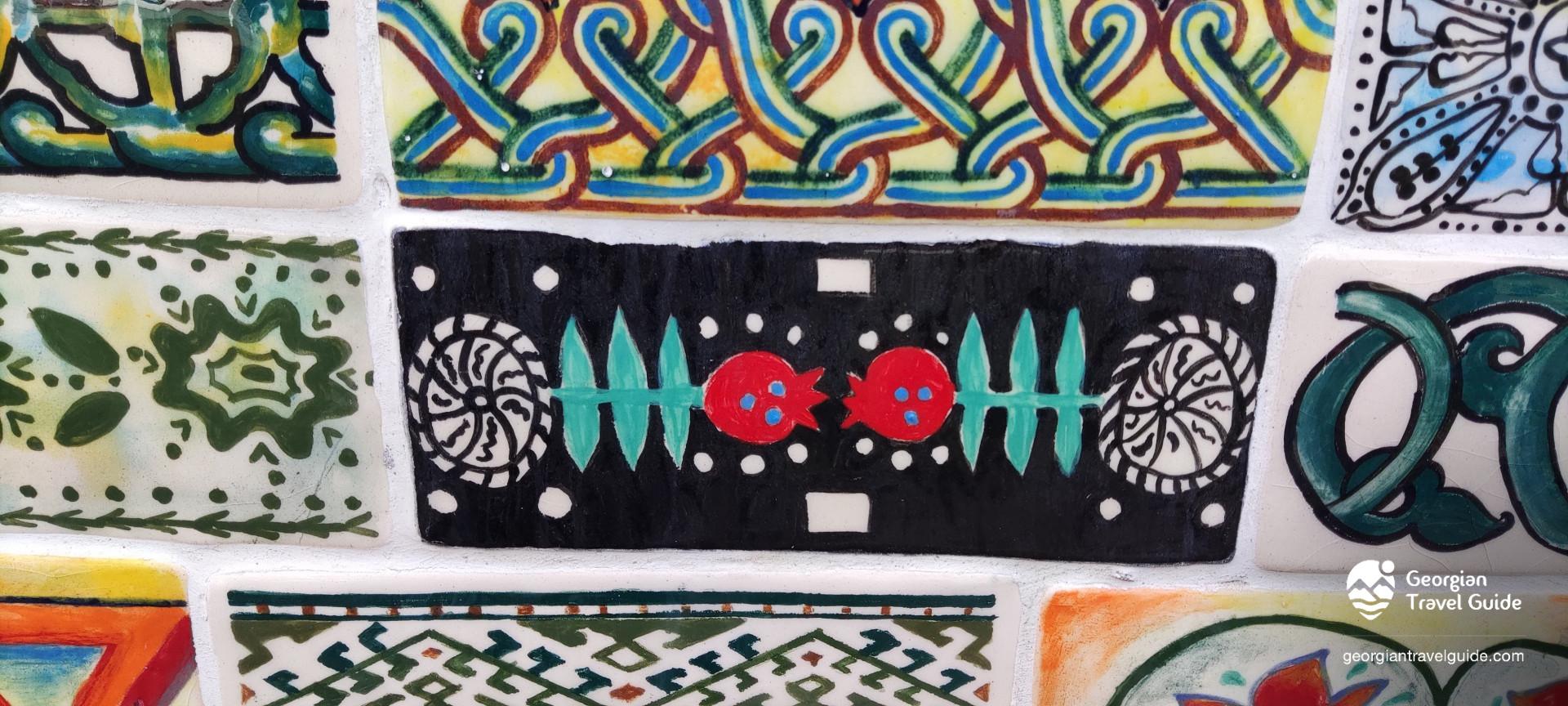
10. 1001 Georgian Ornaments is located near the Gori Theater, in Iakob Gogebashvili Square. This panel is made of 1001 handmade ceramic tiles, and each tile is different, telling its own story about the alphabet, the blue tablecloth, the roses and the intertwined ornaments. The idea belongs to Irina Shotadze from Gori. The execution is by her and her colleagues and friends. Thank you, Irina and friends ❤
11. Gorali ceramics have always been famous for their quality and beauty. Times change, waters flow in the city of seven rivers, but traditions remain. At Ninoshvili #10, you can find ceramic master Giorgi Tatulashvili, who passes on the knowledge received from his ancestors to new generations. Here you can attend a pottery lesson, simply walk with the master for a while. At the same time, buy beautiful traditional souvenirs or applied items, please yourself or your friends, and simply contribute a little to the economic independence of the city.
12. For many, leaving the city without a Gorani cutlet is unthinkable. However, this dish is a more or less modern phenomenon in the regional cuisine. According to local culinary experts, the recipe for a unique variation of the cutlet was created by Givi Abuashvili from Gori. In Gori, the waiters of every restaurant will swear that they make the best “Gorani cutlet”. Well, what do I know? If you haven’t tried it, how will you know? They say that “Shin da Gori” is the best. I think it’s worth a try.
For vegetarians like me, or simply soup lovers, the dishes of Shindi, Dos, Gholo and bread stew are the local “signature dishes”. Ossetian cuisine also has its place in the gastronomic culture of Shida Kartli. Dairy products are especially valued in Ossetian cuisine. Goat cheese is popular, which is often served for breakfast. The traditional Ossetian dish “Dzika” is made from it. In general, specific pies based on dairy products are baked in different parts of Georgia. In Shida Kartli, such a type of pie is Chakhrakina, which is also known as Mkhlovani and has its cousins in Mtiuleti – Mamidashvili.
13. To cool off from the heat, you can drink a good cold coffee at Cafe 22 on Stalin Avenue. You can also try delicious Easter cakes here for Easter, and beautiful and delicious gingerbread cookies in December. Before, before I had children, I paid less attention to such details. Now, I am always looking for new and interesting places in touristic, or even non-touristy areas, which I can say with confidence have a child-friendly environment and food. In short, kid friendly. Approved. Cafe 22
14. In Gori, traces of the 2008 Russian aggression are everywhere. The memorial to the settlement of Verkhvebi is made using the remains of weapons and explosive devices left in this and neighboring districts. Even at first glance, your hair will stand on end - a tree with bombs and children playing and jumping over a hill nearby. How bitter and how symbolic it is, like everything in this blessed Gori - life goes on and there is hope. Especially now.
15. In Gori, there are several walls that still bear the marks of war - the imprints of cluster bombs and bullets. One such wall was on the main street, and we guides showed it to every tourist as a vivid example of the aggression of our northern neighbor. Today, we have one less such wall in Gori, it was destroyed last October for the rehabilitation of the city. However, the Gagosha wall painting is a good illustration of the occupation. Figuratively, if not literally.
There is so much more to see in Gori, I'll probably have to write all night.
However, it is better to see than to read and hear, and it is better for you to make your own discoveries.
I am also including a lost and needed link, where you will find a live map of Gori , marked with important places to visit and basic and interesting information about these places.
For more in-depth information, you can book a Gori Free Walking Tour with Zhana Odiashvili , who knows Gori a million times better than I do. Zhana is a Gori activist and has been leading Gori walking, Soviet architecture, and various thematic tours since 2019. In short, she works tirelessly to properly present her small, picturesque city to travelers around the world.

 GEO
GEO  ENG
ENG  RUS
RUS 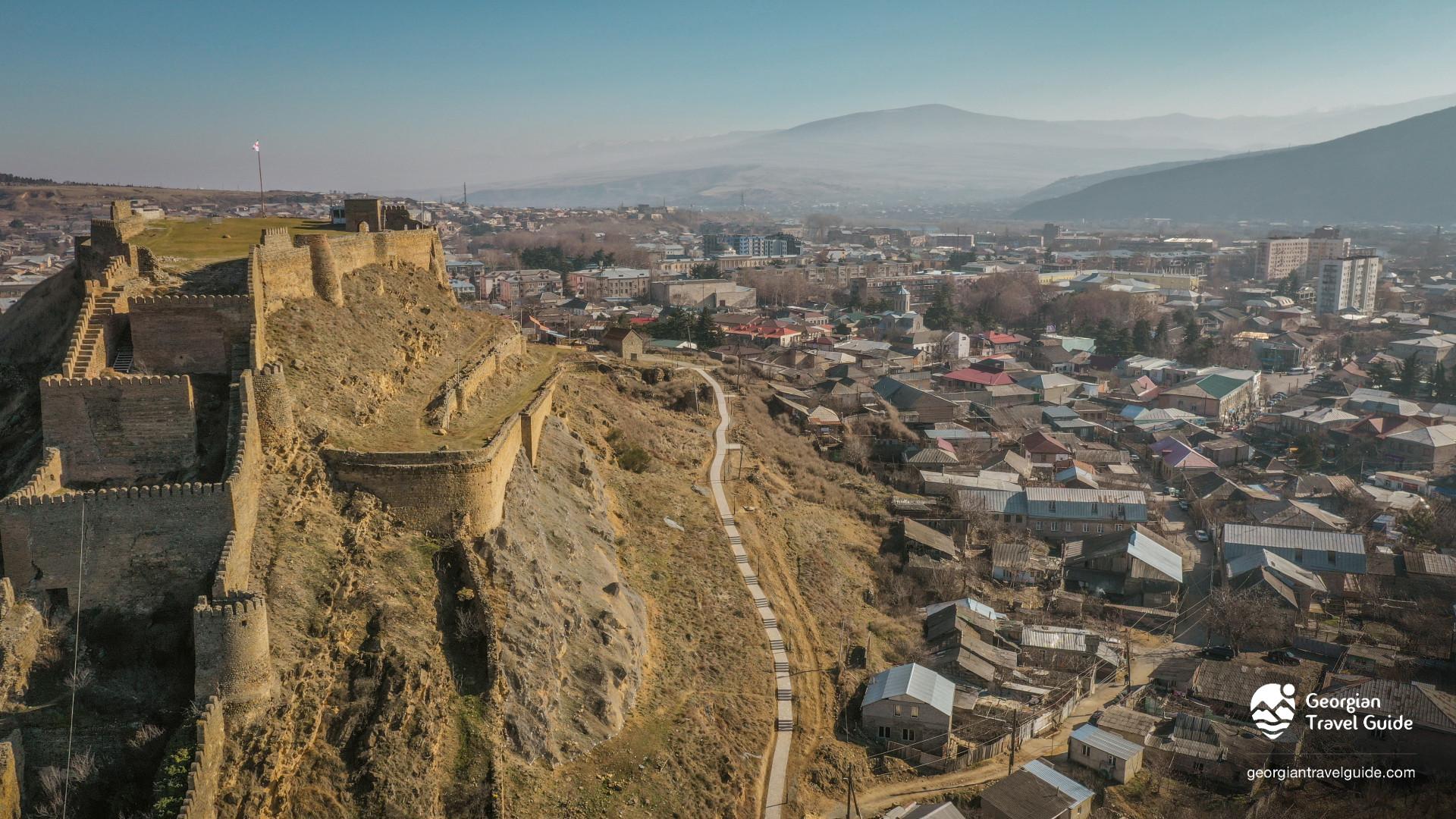











 LOGIN WITH GOOGLE
Please login to add a comment
Write a comment