
 GEO
GEO  ENG
ENG  RUS
RUS 
Help other travelers use your experience.
Review this destination, share your thoughts, impressions, pros and cons.
Let's make traveling easier than ever.

დაამატეთ თქვენი რესტორანი Georgian Travel Guide-ზე — მიიღეთ ონლაინ ჯავშნები წინასწარი გადახდით და გახდით ხილული ყოველთვიურად 100 000-ზე მეტი მოგზაურისთვის.

განათავსეთ საკუთარი კოტეჯი / სასტუმრო ჩვენს პლატფორმაზე და გააცანით თქვენი მომსახურება 100 000-ზე მეტ მოგზაურს.

დაამატეთ თქვენი ავტომობილი Georgian Travel Guide-ზე და გახდით ხილული ყოველთვიურად 100 000-ზე მეტი მოგზაურისთვის.
ხარ გიდი? დაამატე შენი პროფილი Georgian Travel Guide-ზე და დაუკავშირდი მოგზაურებს პირდაპირ — შუამავალი კომპანიებისა და საკომისიოს გარეშე.

იცნობთ ადგილს, რომელიც რუკაზე ჯერ არავის დაუტანია? დაამატეთ ის Georgian Travel Guide-ზე უფასოდ და გააცანით ათასობით მოგზაურს. გაიცანი და გააცანი #უცნობისაქართველო

განათავსეთ თქვენი ტურები და აქტივობები Georgian Travel Guide-ზე და გააცანით ისინი ყოველთვიურად 100 000-ზე მეტ მოგზაურს, რომლებიც სწორედ ახლა გეგმავენ მოგზაურობას საქართველოში.
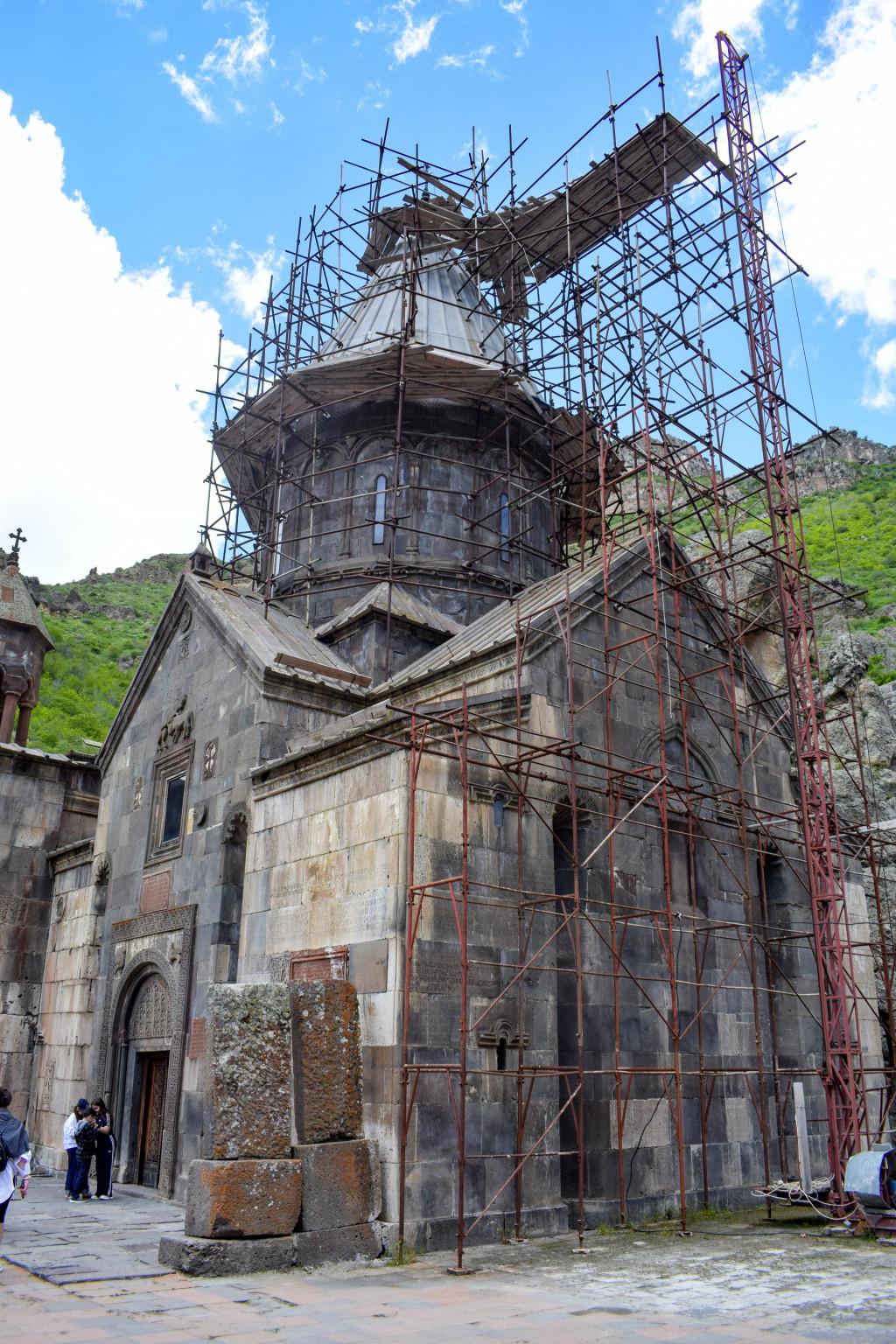
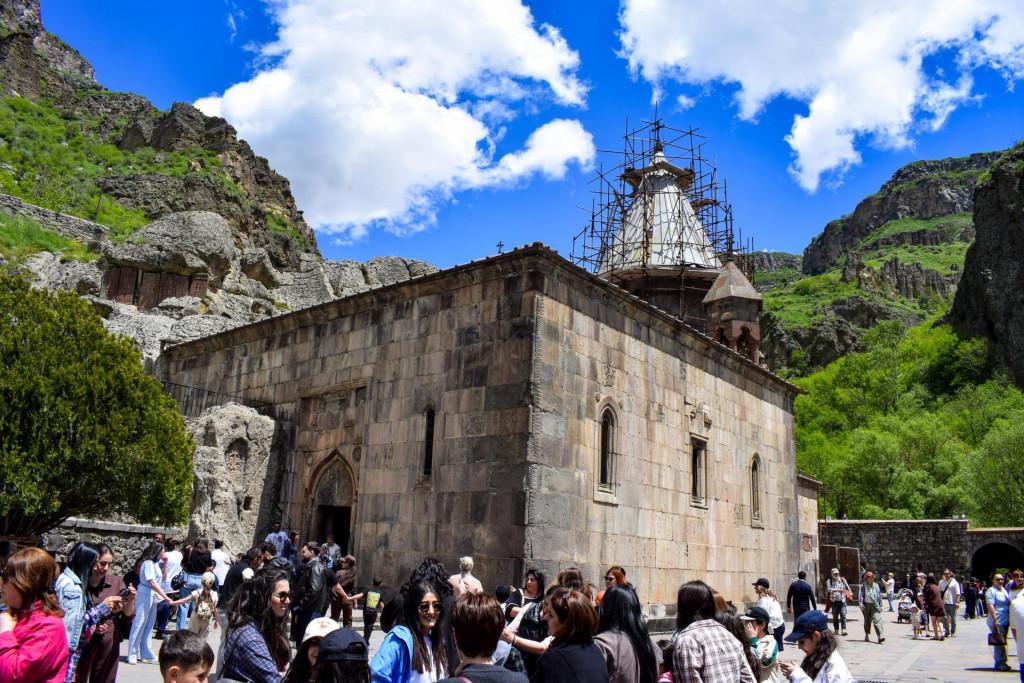
Geghard (Armenian: Խանական, literally: "spear") is a medieval monastery complex in the Kotayk Province of Armenia. It is partially carved into the surrounding mountain range surrounded by cliffs and is included in the UNESCO World Heritage List under enhanced protection status.
Although the main church was built in 1215, the monastery itself was founded in the 4th century by Gregory the Illuminator on the site of a holy spring in a cave. Because of this, the monastery was originally called Airi Vank (Ayrivanq), which means “monastery carved into the rock.” The name by which the monastery is known today—Geghard, or more fully Geghardavank (Geghardavanq—“Monastery of the Spear”)—is associated with the spear with which Jesus was pierced during the crucifixion. According to tradition, this spear was brought to Armenia by the apostle Jude (known locally as Thaddeus) and was kept there along with many other relics. It is currently on display in the Treasury of Etchmiadzin.
The impressive, high cliffs surrounding the monastery are part of the Azat River Gorge and, together with the monastery, are included in the World Heritage List. Some of the churches in the monastery complex are carved entirely into the rock, some resemble simple caves, and others are elaborate structures - with architecturally complex outer walls and halls located deep in the rock. This synthesis, together with numerous carved or free-standing khachkars (stone crosses), creates a unique spectacle and is one of the most popular tourist destinations in Armenia.
Nothing has survived from the original buildings of Airi Vanki. According to Armenian historians of the 4th, 8th and 10th centuries, in addition to the cult buildings, the monastery had well-equipped residential and auxiliary premises. In 923, the monastery was severely damaged by Nasr, the successor of the Arab Caliph in Armenia, who plundered its valuable property (including unique manuscripts) and burned down the magnificent monastery buildings. The complex was not damaged by earthquakes either.
Although there are inscriptions here dating back to the 1160s, the main church was built in 1215 under the patronage of the brothers Zakare and Ivan Mkhargdelze (commanders of Georgian Queen Tamar), who liberated most of Armenia from the Turks. The gaviti (Armenian gate/jamatun), which is partly freestanding and partly carved into the rock, dates back to 1225. The series of rock-cut chapels date back to the mid-13th century, after the monastery was purchased by Prince Prosh Khagbakian, a vassal of the Mkhargdelzes and founder of the Proshian principality.
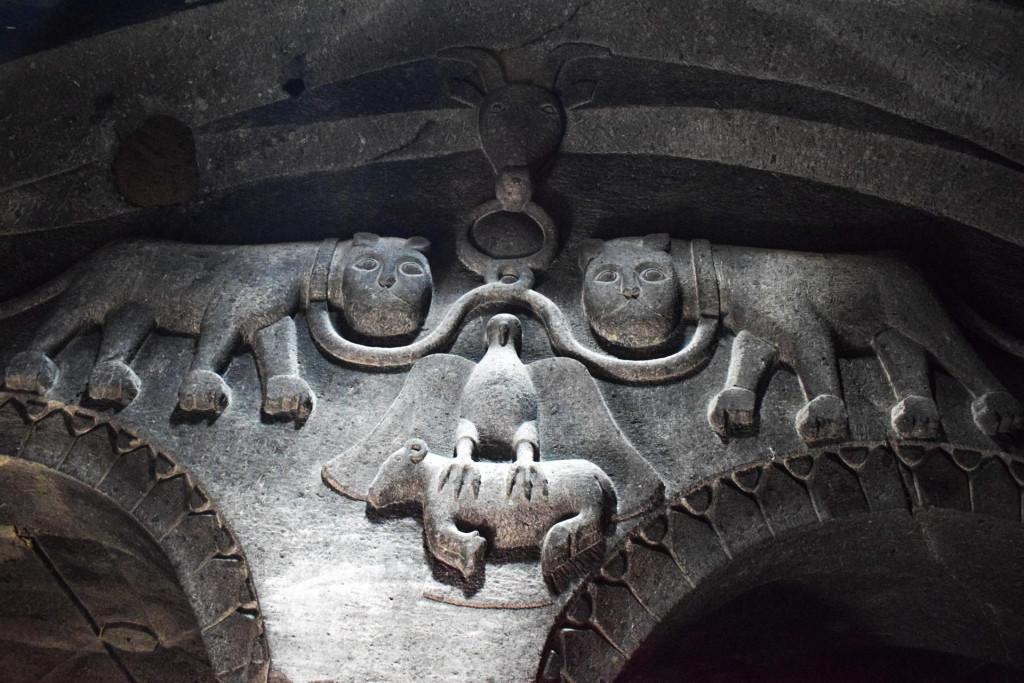
In a short time, the Proshians carved out the rock structures that brought Geghard its well-deserved fame. The entrance hall from the northeast of the gaviti became the tomb of Prince Prosh Khaghbakian in 1283. The Proshian family coat of arms is carved on the rock of the adjacent hall: an eagle holding a lamb in its claws. A staircase located to the west of the gaviti leads to the crypt carved into the rock in 1288 for Papak Proshian and his wife, Ruzukan. In the 13th century, the Proshian princes provided Geghard with an irrigation system. During this period, it was also called the “Monastery of Seven Churches” and the “Monastery of Forty Altars.” Before the Russian conquest of the region, the monastery was deserted, and its main temple was used by Karapapak nomads as a winter shelter for their livestock, until several monks from Echmiadzin resettled there.
Geghard was especially famous for the relics preserved here. The most important of these was the spear that pierced the side of Christ, which, according to legend, was brought by the apostle Thaddeus. This is where its current name, Geghardavank, comes from, which is first mentioned in a document from 1250. In the 12th century, the relics of the apostles Andrew and John were donated to the monastery, which was followed by numerous donations of land, money, and manuscripts from believers over the centuries. In the 13th century, the famous Armenian historian Mkhitaryan Ayriyanets lived in one of the rock cells.
As you approach the main entrance from the west, you will find small caves, chapels, and plots on the slope. Directly in front of the entrance, there are small shelves in the rock where tourists and pilgrims try to throw pebbles to make wishes come true. Right next to the entrance to the courtyard is a 12th-13th century wall that protects the complex on three sides, while a natural wall of rocks surrounds the fourth side.
It is known that most of the monks lived outside the walls, in cells carved into the rock, which, along with simple chapels, have survived to this day. Exquisite khachkars carved in relief are found everywhere on the rock surfaces.
Despite inscriptions from the 1160s, the main temple was built in 1215 with the support of Queen Tamar's generals, the brothers Zakaria and Ivane Mkhargdelze.
This is the central temple of the complex and is built mainly in the traditional style. The church is located on a hill. Its plan is an isosceles cross inscribed in a square, which is covered with a dome resting on a square base. In the corners are small, vaulted two-story chapels, the steps of which protrude from the wall. On the inner walls there are many inscriptions about donations.
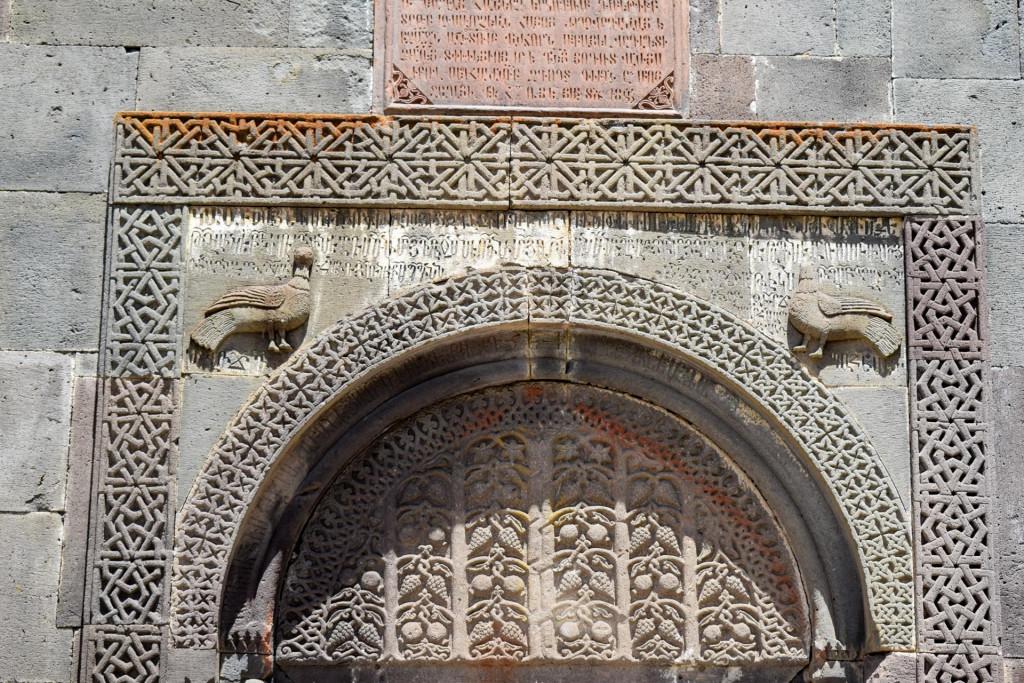
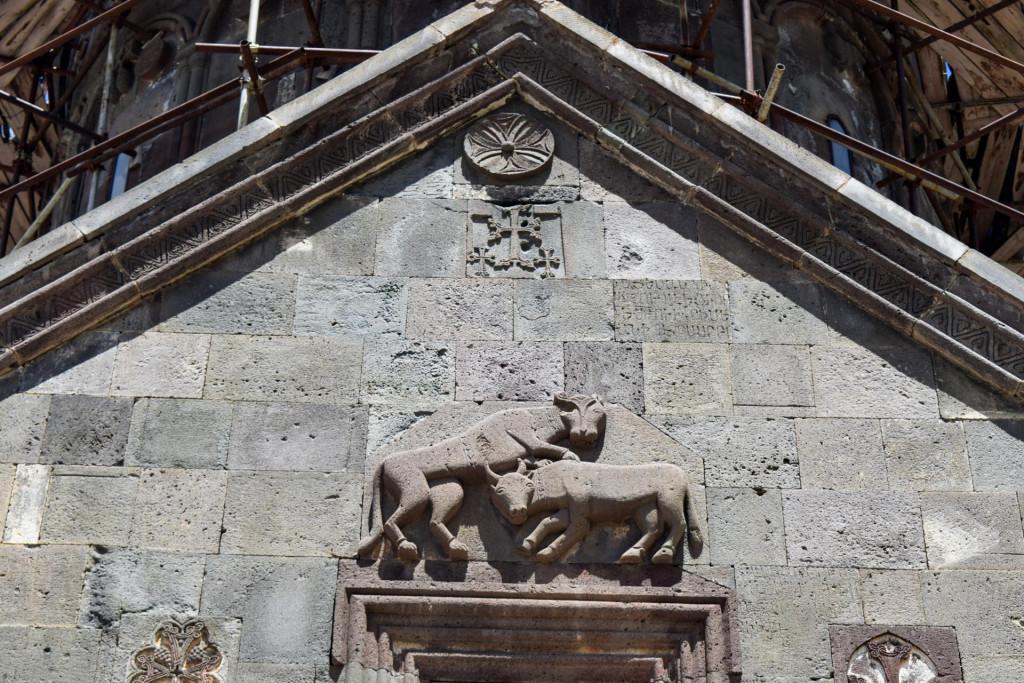
The southern facade of the temple has a portal (entrance) decorated with elaborate carvings. The tympanum is decorated with images of pomegranate trees and ornaments of vine leaves and bunches. Between the arch and the outer frame are figures of doves, whose heads are turned towards the axis of the portal. Above the portal is carved a lion attacking a bull, which is a symbol of the prince's power. The arched part of the neck of the dome is decorated with detailed reliefs of birds, human masks, animal heads, various rosettes and jugs.
Senaki, Gaviti (1215-1225)
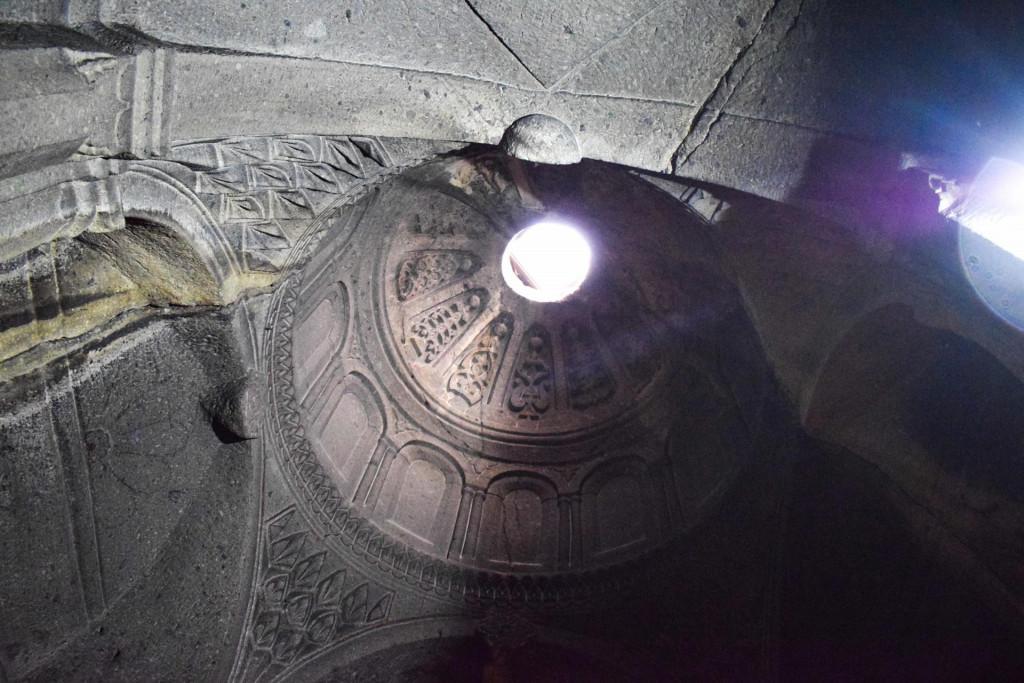
To the west of the main temple is a rock-cut Armenian narthex, built between 1215 and 1225 and connected to the main church. Four massive columns in the center support a stone roof with a central opening for light. The lateral spaces formed by the arrangement of the columns are covered in various ways, while the central part is crowned with a stalactite dome, which is the best example of this technique in all of Armenia. It is believed that this style of "stalactite vault" with a light opening comes from the muqarnas of Islamic architecture, which was established in Armenia from the 11th century. The narthex was used for teaching and gatherings, as well as for receiving pilgrims.
Rock-hewn church with a spring (ca. 1240)
The first rock-cut hall, Avazan (pool), located northwest of Gavit, was carved out in the 1240s in an old cave, on the site of a spring. It was built during the reign of Avag, son of Ivan and nephew of Zakaria Mkhargrzeli. The inscription on the wall “Remember Archimandrite Galdzag” indicates the identity of the architect of these caves.
The main battle (1283)
After Prosh Khagbakian bought the monastery from the Mkherdzher, he turned it into a family monastery and crypt of the Proshians. The second rock church and crypt of the Virgin Mary (Astvatsatsin) located east of Avazan were excavated in 1283, presumably again by Galdzag. They can also be reached from Gaviti. The “main chamber” is a hall carved into the rock, almost square in shape, with deep reliefs on the walls. Of particular interest is the primitive high relief on the north wall, above the arches: in the center is depicted a ram’s head holding a chain in its throat; this chain is wrapped around the necks of two lions, whose heads are turned towards the viewer. Instead of the ends of the lions’ tails, dragon heads are depicted raised up, which is a symbolism dating back to pagan times. Between the lions and below the chain is an eagle with spread wings holding a lamb in its talons — this is likely the family coat of arms of the Prosh princes.
Prussian Chapel (1283)
The rock-cut crypt opens the way to the second rock-cut church, the “Proscian Chapel” (Church of the Virgin Mary). According to the inscription, this church was built in 1283 with the donation of Prince Proscia. It has a cruciform plan, rounded corners, and the dome is decorated with half-columns alternating with false windows. The walls are decorated with reliefs of animals, warriors, crosses, and plant motifs. At the foot of the altar stairs is a realistic image of a goat, and on the khachkar to the left of the altar apse, there is a figure of a man holding a scepter in his right hand — presumably this is the founder of the church, Prince Proscia himself.
Upper Jamatun (1288)
The "Upper Zhamatun" was the crypt of Papak Proshian and his wife, Ruzukan, although their tombstones are lost. It was excavated in 1288 on the second level, north of the Proshian crypt, which can be reached by an external staircase (at the Gavit Gate). Its shape also repeats the structure of the Gavit. Princes Merik and Grigori are buried here.
St. Gregory's Chapel
The Chapel of St. Gregory the Illuminator (formerly the Chapel of the Virgin Mary), built before 1177, stands on the road, a hundred meters from the entrance to the monastery. It is partially carved into the rock and its composition was greatly influenced by the shape of the cave that previously existed here. The chapel, which has a rectangular plan and a horseshoe-shaped apse, is surrounded by passages and buildings carved at different levels to the east and northeast. Traces of plaster and the remains of dark frescoes testify that the interior walls of the chapel were painted. Various ornamental khachkars are carved on the outer walls of the building and the surrounding rocks.

Our guides are ready to help you on this trip


Help other travelers use your experience.
Review this destination, share your thoughts, impressions, pros and cons.
Let's make traveling easier than ever.
 LOGIN WITH GOOGLE
Please login to ask a question
Ask a Question